

17 August 2025
Why Is Dental Imaging Essential Before Orthodontic or Implant Treatment?
When it comes to successful dental treatment planning—especially in the fields of orthodontics and implantology—clarity, precision, and foresight are everything.
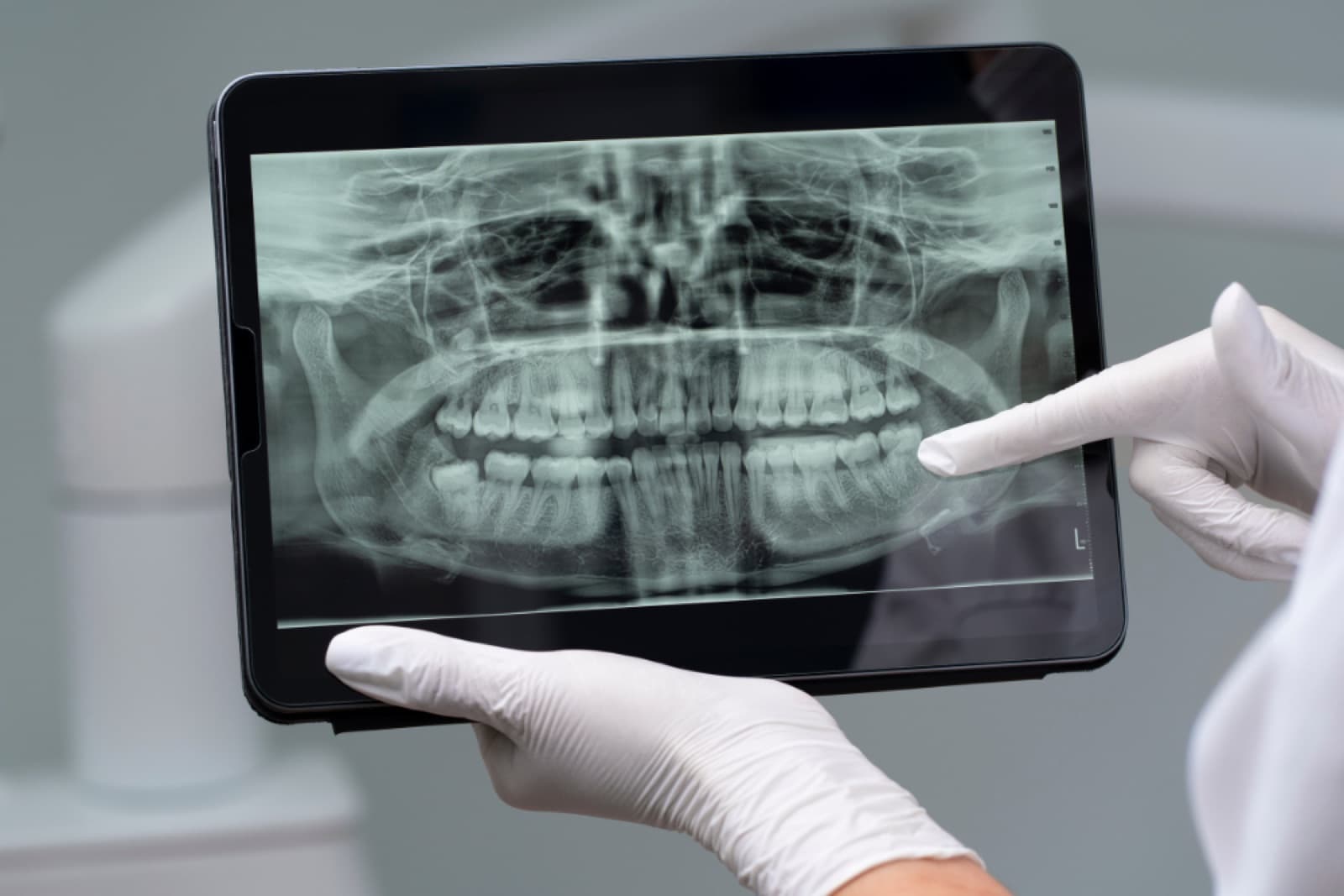
When it comes to successful dental treatment planning—especially in the fields of orthodontics and implantology—clarity, precision, and foresight are everything. This is where dental imaging steps in as a non-negotiable component. From identifying hidden anatomical complexities to streamlining treatment pathways, imaging is not just helpful—it’s critical.
What Role Does Dental Imaging Play in Modern Dentistry?
Dental imaging involves the use of X-rays, 3D scans, and other diagnostic tools to visualise structures that aren’t visible during a clinical exam. These tools allow dental professionals to:
- Assess the position and orientation of teeth
- Evaluate jawbone density and shape
- Identify abnormalities or hidden pathologies
- Determine the location of nerves and sinuses
- Plan exact placement of orthodontic appliances or implants
Without these insights, treatments can become guesswork—which no patient should ever experience.
How Does Imaging Improve Orthodontic Treatment Outcomes?
Orthodontic treatment is about more than straight teeth. It involves assessing how the jaws align, how teeth erupt, and how facial bones are structured.
Dental imaging provides:
- A clear view of unerupted or impacted teeth
- Insight into root positioning and angulation
- Analysis of skeletal and dental relationships through cephalometric X-rays
- A visual roadmap for applying braces or aligners correctly
- Prevention of unwanted side effects like root resorption
Why Is Imaging Indispensable Before Dental Implants?
Dental implants require precise surgical planning. Placing a titanium implant without thoroughly understanding the underlying bone and anatomical landmarks is risky and can lead to failure or complications.
Imaging supports:
- Accurate mapping of the implant site
- Assessment of bone quality and quantity
- Identification of nearby sinus cavities or the inferior alveolar nerve
- Planning for the size, angulation, and depth of the implant
- Use of surgical guides based on 3D scans
Which Imaging Techniques Are Commonly Used?
Dental professionals rely on a range of imaging methods, depending on the complexity of the case and treatment required.
Common Imaging Techniques and Their Purpose
| Imaging Type | Purpose | Common Use | 3D Capability | Radiation Level |
| OPG (Panoramic X-ray) | Full jaw overview | Orthodontics & Implants | No | Low |
| CBCT | Detailed 3D of bone & structure | Implants & Surgery | Yes | Moderate |
| Cephalometric X-ray | Skeletal & dental alignment | Orthodontics | No | Low |
| Intraoral X-rays | Single tooth detail | Cavity & root checks | No | Low |
| Periapical X-rays | Root & bone apex assessment | Root canal, implants | No | Low |
Each type of imaging has its role, and often, more than one is used to get a comprehensive view of the patient’s oral anatomy.
What Happens If Dental Imaging Is Skipped?
Forgoing imaging before orthodontic or implant treatment introduces considerable risks. These include:
- Incorrect diagnosis or missed pathologies
- Poorly placed implants causing damage to nerves or sinus membranes
- Misaligned orthodontic appliances leading to ineffective treatment
- Unexpected treatment delays or complications
How Does Imaging Impact Treatment Planning?
Dental imaging empowers clinicians to design highly customised treatment plans. Instead of relying on assumptions or surface-level evaluations, clinicians can:
- Tailor bracket placement and aligner design
- Create surgical guides for implant insertion
- Avoid anatomical dangers such as nerves or root collision
- Ensure predictable treatment outcomes
- Reduce chair time and optimise healing
Why Imaging Matters for Each Treatment Type
| Treatment Type | Key Imaging Role |
| Orthodontics | Tooth root mapping, growth analysis, space availability |
| Implants | Bone volume assessment, nerve location, implant trajectory |
| Combined Cases | Surgical-orthodontic coordination, full oral mapping |
What Are the Key Benefits of Imaging in Orthodontics?
- Detects impacted or extra teeth
- Helps track jaw development in children and teens
- Provides visual evidence to monitor treatment progress
- Prevents root resorption through precise bracket positioning
- Enhances patient understanding and consent
How Does CBCT Imaging Revolutionise Implant Planning?
Cone Beam Computed Tomography (CBCT) has transformed implant dentistry. It offers a 3D view of the patient’s oral structures, enabling:
- Virtual implant placement
- Assessment of bone grafting needs
- Improved surgical accuracy
- Safer outcomes by avoiding vital structures
- Seamless digital integration with implant planning software
What Are the Core Attributes That Make Imaging Valuable?
| Attribute Category | Details |
| Precision | Accurate 2D/3D visualisation of teeth, roots, nerves, and jawbones |
| Non-invasive | Imaging provides crucial internal insight without surgical interference |
| Diagnostic Speed | Fast processing with digital systems |
| Radiation Safety | Low-radiation techniques like digital X-rays and CBCT |
| Treatment Efficiency | Enables tailored planning for better and faster treatment outcomes |
| Multi-View Access | Provides axial, sagittal, and panoramic perspectives |
| Customisation | Supports case-specific orthodontic/implant solutions |
Why Should Patients Insist on Pre-Treatment Imaging?
Patients should view imaging not as an optional step but as an essential safeguard. Whether planning for orthodontics or implants, comprehensive diagnostics:
- Support safer procedures
- Minimise unnecessary revisions
- Enable long-term success
- Allow clinicians to foresee and manage complexities
Why Choose Border Radiology Specialists for Your Dental Imaging?
At Border Radiology Specialists, we understand how critical high-quality imaging is to achieving successful dental outcomes. We combine advanced diagnostic equipment, including OPG and Lateral Ceph, with a team that collaborates closely with your dentist or specialist. Whether you are planning orthodontic realignment or considering dental implants, our diagnostic services provide the clarity and confidence needed to proceed with precision. We’re proud to be a trusted name for pre-treatment imaging across the region, ensuring your care is informed, safe, and effective from the very start.
References
- Australian Dental Association – Diagnostic Imaging in Dentistry
https://www.ada.org.au - Dental Board of Australia – Guidelines for Prescribing Dental Radiographs
https://www.dentalboard.gov.au - The University of Adelaide – Radiology and Diagnostic Sciences
https://health.adelaide.edu.au/dentistry/
Frequently Asked Questions
- What is a CBCT scan and why is it important for implants?
A CBCT (Cone Beam CT) scan produces 3D images of your teeth, bones, and surrounding structures, making it vital for accurate and safe implant placement. - Do I need a dental X-ray before getting braces?
Yes, X-rays help assess tooth roots, jaw development, and any hidden issues that may impact orthodontic success. - How safe are dental imaging procedures?
Dental imaging, particularly digital and CBCT scans, use very low levels of radiation and are considered safe for diagnostic use when clinically justified. - Can imaging detect problems my dentist can’t see?
Absolutely. Imaging reveals hidden structures, such as bone defects, impacted teeth, and nerve pathways, that cannot be identified through visual examination alone. - How long does a dental imaging session take?
Most imaging sessions take less than 15 minutes and provide immediate results that can be shared with your treating dentist. - Is it necessary to repeat scans during treatment?
Sometimes, especially for long-term treatments like orthodontics, follow-up scans help track progress or make mid-course corrections safely.
This article is general information, not a substitute for medical advice. For guidance about your own situation, speak with your GP or call us on (02) 6046 9755.