

19 August 2026
Inside a CT Scan: What It Sees and What It's Like
What a CT scan is, when it is used, what happens during the appointment, and how radiation, contrast and safety are managed. CT imaging in Albury.
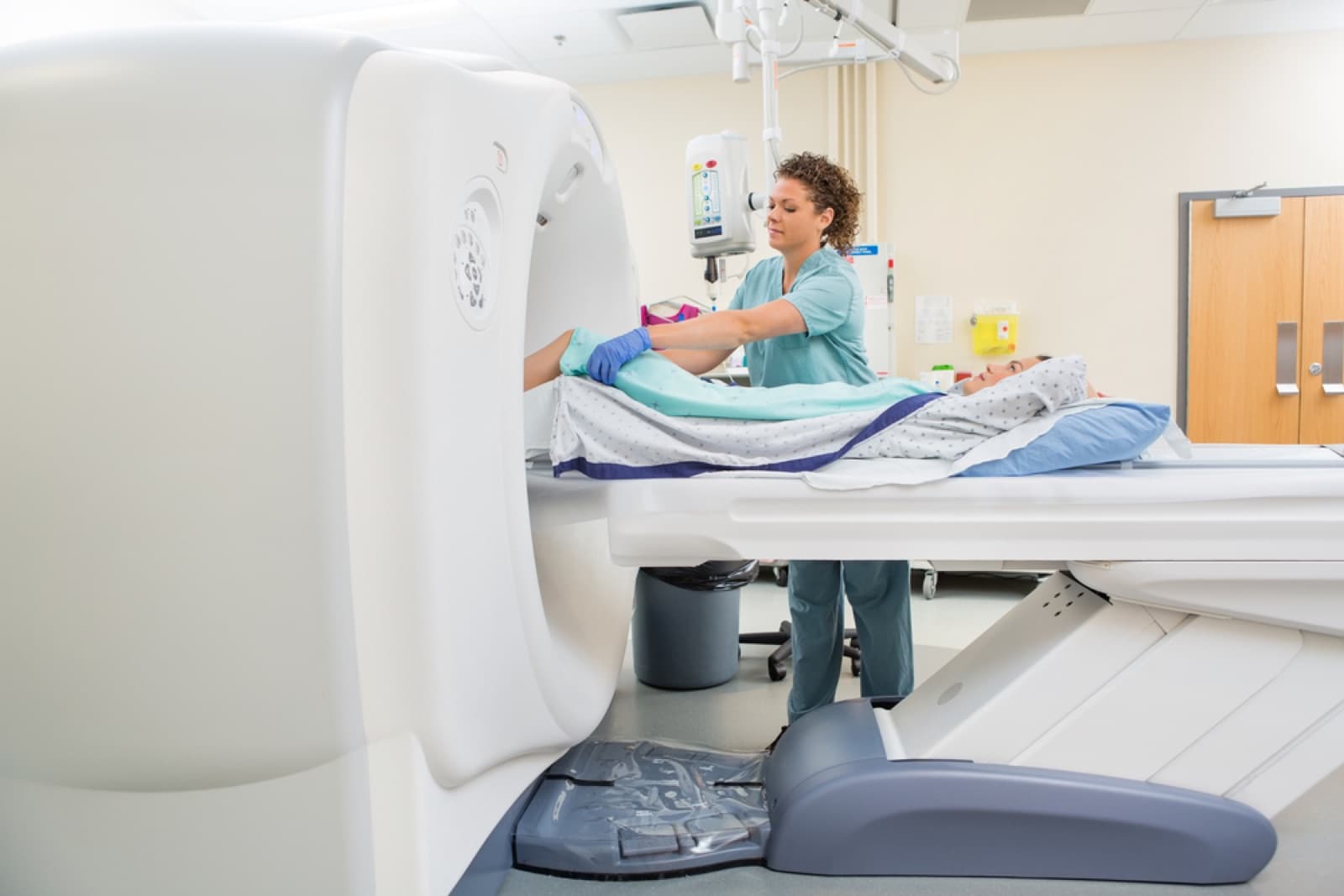
A CT scan is one of the most powerful tools in modern medical imaging, able to produce detailed pictures of almost any part of the body. If your doctor has referred you for one, you may be wondering what it involves and whether there is anything to be concerned about. The good news is that a CT scan is quick, comfortable and, for the great majority of people, entirely straightforward. Understanding what a CT scan is, when it is used, what happens during the appointment, and how radiation and safety are managed takes the uncertainty out of the process and helps you arrive well prepared and reassured.
What a CT Scan Is
As healthdirect explains, a CT scan is a type of x-ray that creates detailed two- or three-dimensional images of the inside of your body, providing more detail than a standard x-ray.
The letters CT stand for computed tomography. The scanner takes a series of x-ray images from many angles as you pass through a ring-shaped machine, and a computer combines them into cross-sectional slices that can be viewed in fine detail.
This ability to show thin cross-sections is what sets CT apart. It can reveal soft tissues, blood vessels, bone and organs that do not always show up clearly on an ordinary x-ray, which is why it is so valuable for a wide range of conditions.
The whole process is quick and comfortable, and the scanner itself is far more open than many people expect, which often comes as a reassurance to those who feel uneasy about enclosed spaces.
When a CT Scan Is Used
CT scans are used to investigate a huge variety of situations. They are often used to look at internal injuries after an accident, to examine the chest, abdomen or pelvis, and to help diagnose conditions affecting the organs.
Because they show such fine detail, CT scans can help a doctor pinpoint a problem, plan treatment or surgery, and monitor how a condition is responding over time. They are also used to guide certain procedures.
A CT scan is always requested for a specific reason by your doctor, who weighs up how the information it provides will help your care. If you are unsure why one has been recommended, it is always worth asking your referring doctor.
Because CT can capture a large area quickly, it is also particularly useful in urgent situations, where a fast, detailed picture can make an important difference to decisions about someone’s care.
What Happens During a CT Scan
For most CT scans, you lie flat on a table that moves slowly through the ring-shaped scanner. The machine is open at both ends, not an enclosed tube, so most people do not find it confining.
It is important to stay still during the scan so the images are clear, and you may be asked to hold your breath for a few seconds at certain points. The scan itself is comfortable, and the actual imaging usually takes only a few minutes.
Some scans use a contrast dye to make particular structures, such as blood vessels or organs, show up more clearly. This may be given as a drink or through a small injection, and it is explained to you beforehand if it is needed.
Radiation, Contrast and Safety
Because a CT scan takes many x-ray images, it uses a higher dose of radiation than a single x-ray. For this reason, CT scans are only recommended when the benefit of the information they provide outweighs that small risk.
Modern scanners and careful technique keep the radiation dose as low as reasonably possible while still producing clear images, and for children in particular the dose is adjusted to suit their size.
It is important to tell the clinic if you are, or might be, pregnant, since CT scans are generally avoided during pregnancy where possible. If a contrast dye is being used, you should also mention any allergies or kidney problems beforehand.
CT Imaging in Albury
For people across Albury, Wodonga and the wider Border region referred for a CT scan, understanding what the appointment involves helps take away any apprehension and makes the day go smoothly.
Providing CT scans, the team uses modern technology and careful technique to capture clear images while keeping the radiation dose as low as reasonably possible, and takes the time to explain the process.
A CT scan is a quick and comfortable way to gather detailed information that helps guide your care, and knowing what to expect beforehand is the simplest way to feel at ease on the day.
The Takeaway
A CT scan is a type of x-ray that combines many images into detailed cross-sectional pictures, showing far more than a standard x-ray and helping diagnose injuries, investigate the organs and guide treatment. During the scan you lie on a table that passes through an open, ring-shaped machine, staying still and sometimes holding your breath, and it is quick and comfortable. Because CT uses more radiation than a single x-ray, it is used when the benefits outweigh the small risk, and it is important to mention if you may be pregnant. Border Radiology Specialists provides CT scans in Albury with careful, low-dose technique.
Frequently Asked Questions
What is a CT scan?
A CT, or computed tomography, scan is a type of x-ray that takes a series of images from many angles as you pass through a ring-shaped machine. A computer combines these into detailed cross-sectional slices, giving far more detail than a standard x-ray. It can show soft tissues, blood vessels, bone and organs that an ordinary x-ray may not reveal clearly.
Is a CT scan painful or uncomfortable?
The scan itself is comfortable. You lie on a table that moves slowly through an open, ring-shaped machine, and you need to stay still, sometimes holding your breath briefly. Most people do not find it confining, as the machine is open at both ends. If a contrast dye is injected, you may feel a brief warm sensation, which is normal.
How much radiation does a CT scan use?
Because a CT scan takes many x-ray images, it uses a higher dose of radiation than a single x-ray. For this reason, CT scans are only recommended when the benefit of the information outweighs that small risk. Modern scanners and careful technique keep the dose as low as reasonably possible, and doses are adjusted for children.
What is contrast dye and will I need it?
Contrast dye is a substance that makes particular structures, such as blood vessels or organs, show up more clearly on the scan. Not every CT scan needs it. If it is required for your scan, it may be given as a drink or through a small injection, and this is explained to you beforehand. Tell staff about any allergies or kidney problems.
Can I have a CT scan if I’m pregnant?
CT scans are generally avoided during pregnancy where possible, because they use radiation. It is important to tell the clinic if you are, or might be, pregnant, so your doctor can consider whether the scan is necessary or whether another test that does not use radiation, such as ultrasound, might be suitable instead.
This blog is intended for general informational purposes only and does not constitute medical advice. Every patient’s health needs are unique. Please consult a qualified health practitioner for advice specific to your situation. Border Radiology Specialists encourages all patients to discuss any imaging referral with their doctor or a qualified health practitioner.
This article is general information, not a substitute for medical advice. For guidance about your own situation, speak with your GP or call us on (02) 6046 9755.